
Licensed and Insured Auto Transport: Fort Lauderdale Guide
Before you hand over keys or a deposit, a licensed and insured auto transport company in Fort Lauderdale should be able to hand you five things: an active USDOT number, an MC number you can look up yourself, a certificate of insurance showing cargo coverage, a clear answer on whether the company is a broker or the carrier, and an all-in written quote. If any of those come back vague, that is your answer. Here is how to check each one yourself in about fifteen minutes.
- A Florida business license is not transport authority – ask for the USDOT and MC numbers and verify them on the FMCSA’s public records.
- “Insured” means nothing until you read the cargo insurance certificate, including limits, dates, deductible, and exclusions.
- Ask directly whether you are booking with a broker or the carrier, and who will actually arrive at your door.
- A quote far below every other quote usually signals a bid that no driver will accept at that price.
- Photograph your vehicle and read the bill of lading before you sign at pickup and again at delivery.
1. Verify Federal Authority, Not Just a Business License
A local business registration tells you a company exists. It does not tell you whether that company is authorized to move vehicles between states. Interstate auto transport is regulated federally, and every legitimate operator carries a USDOT number, with brokers and carriers also holding an MC number.
Ask for both numbers, then look them up yourself in the FMCSA’s public SAFER and Licensing & Insurance records. You are confirming three things: that authority status reads active, that the type of authority matches what the company says it does, and that the legal name on file matches the name on your paperwork and your credit card statement.
Treat these as warning signs: numbers listed as pending, a record under a different company name with no explanation, or a salesperson who says customers do not need to see them.
2. Read the Certificate of Insurance, Not the Slogan
“Licensed and insured” is marketing language until you see the certificate of insurance. The line that protects your car is cargo insurance – the policy that responds if your vehicle is damaged in transit. Liability coverage pays for damage the truck causes to other people and property, so it is not your coverage.
When the certificate arrives, check four details:
- Cargo limit – a single limit spread across a full trailer of vehicles is very different from coverage sized to your car’s value.
- Policy dates – coverage must be active across your entire pickup and delivery window.
- Deductible – ask in writing who is responsible for it.
- Exclusions – personal items left inside, pre-existing damage, and weather events are commonly excluded.
One more call worth making: your own insurer. Some personal auto policies respond while a vehicle is being shipped and some do not, and you want to know which before booking.
3. Broker or Carrier? Ask Before You Book
Many companies in this industry are brokers – they accept your booking and assign the job to a carrier that owns the truck. That is a legal and common model, but it changes your questions.
If you are booking with a broker, ask when you will learn the assigned carrier’s name and whether you will receive that carrier’s insurance certificate. Either way, you want to know before booking whose driver will be standing in your driveway.
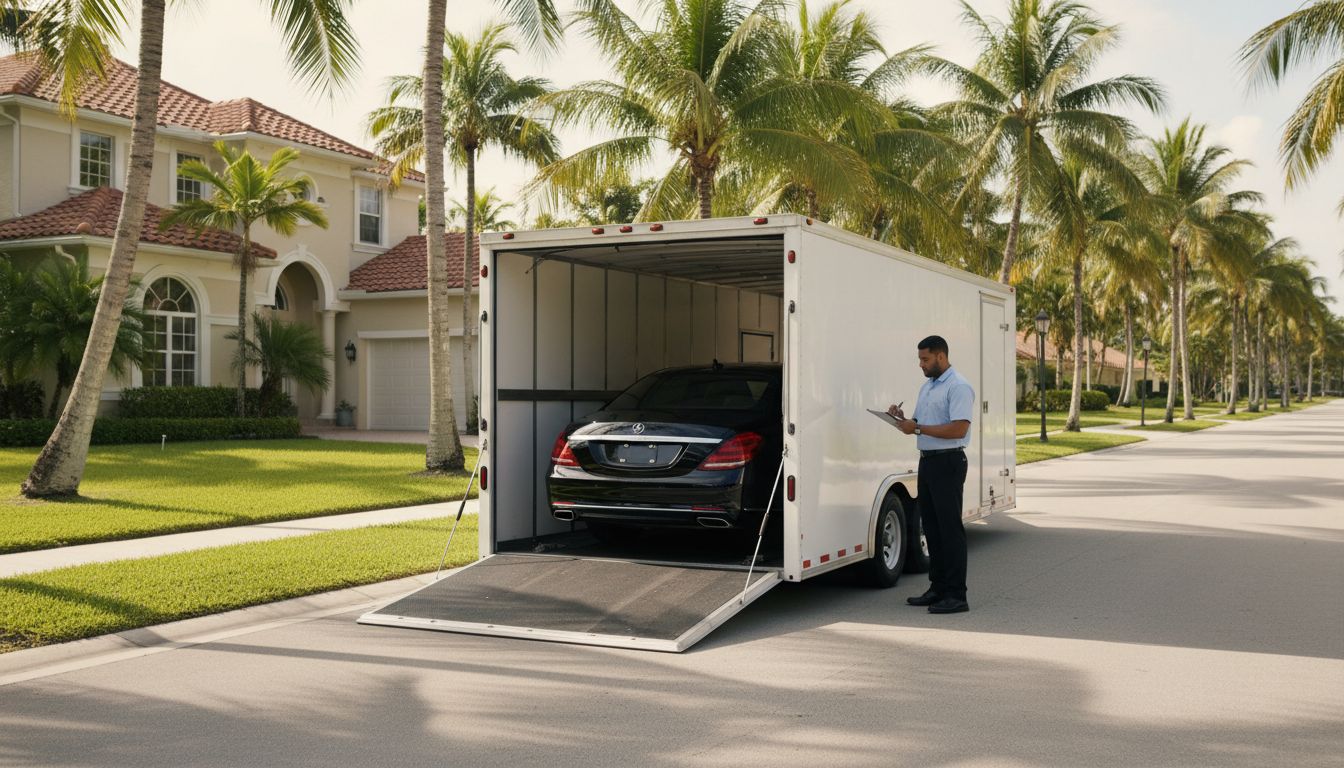
At A&C Car Transport we handle enclosed auto transport, car shipping, cross country transport, and door-to-door service across Fort Lauderdale, Hollywood, Pembroke Pines, Pompano Beach, Davie, Sunrise, Plantation, Miramar, and Weston – and we expect customers to put these same questions to us. If you want your vehicle to stay on one truck from pickup to delivery, ask about our single-truck auto transport in Fort Lauderdale option.
Your Fifteen-Minute Vetting Table
| What to verify | Why it matters | How to check it |
|---|---|---|
| USDOT + MC number | Proves federal authority to move cars interstate | Look up both in FMCSA public records; confirm status is active |
| Cargo insurance certificate | It is the policy that pays for damage to your vehicle | Request the certificate by email and read limits, dates, exclusions |
| Broker or carrier role | Determines who is accountable on pickup day | Ask outright, then match the answer to the authority type on file |
| All-in written quote | Prevents price changes after your car is loaded | Get it in writing with transport type, route, and payment terms stated |
| Deposit and cancellation terms | Protects you if plans or timing change | Read the terms before paying; avoid untraceable payment methods |
4. Look at the Quote Structure Before the Price
The lowest quote is not automatically the best one. Pricing in auto transport moves with route demand, and a number well below every other bid often means no driver will take the load at that rate – which shows up later as delays or a price increase.
Before you accept any quote, confirm in writing: the total price and what is included, the deposit amount and when it is charged, the cancellation terms, the accepted payment methods, and whether the date you were given is a scheduled window or a firm appointment. Ask how changes are communicated if the schedule shifts.
5. Local Questions Worth Asking in Fort Lauderdale
South Florida driveways, gated communities, and condo garages create real access limits for a full-size trailer. Ask how door to door car transport in Fort Lauderdale is handled when a street is too narrow or a garage entrance is too low – a good answer is a nearby safe loading point arranged in advance, not a surprise on pickup day.
Seasonal demand matters too. Routes in and out of Fort Lauderdale, Hollywood, Pompano Beach, and Weston get busy, so book earlier and be skeptical of quotes that look far below market during peak weeks. Many owners of classics, exotics, and newer vehicles also choose enclosed auto transport in Fort Lauderdale for the added protection of a covered trailer, and you can compare that against the other car shipping services in Fort Lauderdale we offer.
6. Confirm the Inspection and Claims Process
The bill of lading is both your contract and your condition report. At pickup, walk the vehicle with the driver and make sure every existing scratch, chip, and dent is noted on the form before you sign.
Take your own timestamped photos of all four sides, the roof, the wheels, and the odometer. At delivery, inspect in good light and write any new damage on the delivery copy before signing – a signed clean bill of lading makes a later claim much harder. Ask in advance how claims are filed and what the deadline is.
Ask Us These Same Questions
Any company worth booking will welcome this checklist. If you are comparing options for auto transport in Fort Lauderdale, call A&C Car Transport at (754) 214-8855 and ask us for our numbers, our insurance certificate, and a written quote for your vehicle and route. We would rather answer every question up front than have you wondering on pickup day.
Frequently Asked Questions
How do I check that a Fort Lauderdale auto transport company is really licensed?
Ask for the company's USDOT number and MC number, then look them both up yourself in the FMCSA's public SAFER and Licensing & Insurance records. Confirm the authority status is active, the authority type matches what the company told you (broker or carrier), and the legal name on file matches the name on your paperwork. Pending numbers or a mismatched company name are reasons to pause.
Does the transport company's insurance cover my car, or do I need my own?
The coverage that applies to your vehicle is the carrier's cargo insurance, so request the certificate of insurance and read the limit, policy dates, deductible, and exclusions. Personal belongings left in the car and pre-existing damage are commonly excluded. It is also worth calling your own insurer, because some personal auto policies respond during transport and some do not.
Should I pay a deposit before my car is picked up?
A deposit is normal in auto transport, but the terms should be in writing before you pay: the amount, when it is charged, what happens if you cancel, and what happens if the schedule changes. Use a traceable payment method and get the certificate of insurance and authority numbers first. Verifying before paying keeps your leverage intact.
Is enclosed transport worth it for shipping a car out of Fort Lauderdale?
Enclosed transport uses a covered trailer, which many owners prefer for classic, exotic, luxury, and newer vehicles because it shields the car from road debris and the elements. Enclosed auto transport is A&C Car Transport's focus, alongside door-to-door service across Fort Lauderdale, Hollywood, Pembroke Pines, Pompano Beach, Davie, Sunrise, Plantation, Miramar, and Weston. Call (754) 214-8855 to compare it with open transport for your vehicle and route.
What should I do at pickup and delivery to protect myself?
Walk the vehicle with the driver and make sure all existing damage is recorded on the bill of lading before you sign, then take your own timestamped photos of every side, the roof, the wheels, and the odometer. At delivery, inspect in good light and note any new damage on the delivery copy before signing. Ask ahead of time how claims are filed and what the filing deadline is.